Producer
Dry River
 Martinborough, New Zealand, New Zealand
Dr. Neil McCallum and his wife Dawn founded Dry River in 1979, establishing it as one of the original five wineries in the Martinborough region. The estate takes its name from an 1877 sheep station located in the South Wairarapa district. Working alongside other early viticulturists, McCallum, a former research chemist, helped identify the specific potential of the local gravelly terraces for viticulture. In 2002, the estate was sold to American investor Julian Robertson and California winegrower Reg Oliver. Ownership shifted again in November 2022 when Wellington businessman Charlie Zheng purchased the property. This acquisition brought the winery back under New Zealand ownership and integrated it into a portfolio that includes other local wine and hospitality interests.
The vineyards are situated on the Martinborough Terrace, a landform defined by deep, free-draining alluvial gravels and a dry, temperate climate. Production relies on three primary vineyard blocks: Dry River Estate, Craighall, and Lovat. The Dry River Estate block, planted at the time of founding, serves as the foundation for the flagship Pinot Noir. The winemaking philosophy centers on achieving concentration through low-intervention techniques and a lack of irrigation, a practice known as dry farming. To manage the vines, the team employs early leaf stripping and strict crop thinning to ensure the grapes reach full phenolic maturity. Current management emphasizes regenerative and organic farming practices, avoiding synthetic inputs to maintain soil health. Ben McNab serves as the head winemaker, focusing on a hands-on, vineyard-led production style.
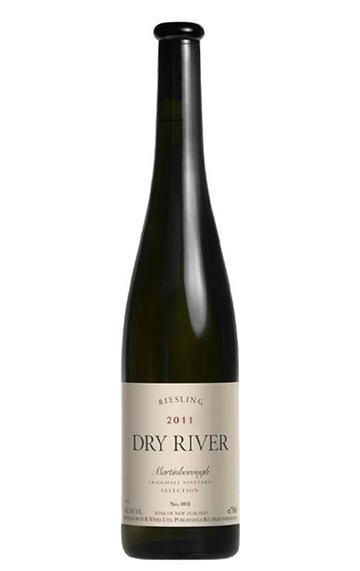
Dry River earned a significant following through small-scale production and a distribution model primarily focused on a private mailing list, which often involves a multi-year waiting period. The portfolio is most recognized for Pinot Noir, though it also produces highly concentrated Pinot Gris, Riesling, and Gewürztraminer. These aromatic whites are frequently produced in late-harvest or botrytis-affected styles inspired by traditional European techniques. The wines are characterized by their density, structure, and ability to age over several decades. Despite changes in management over the years, the winery maintains its focus on single-vineyard expressions and limited releases. It remains a central fixture of the Martinborough Terrace area, valued for its commitment to the specific soil characteristics of its home site.