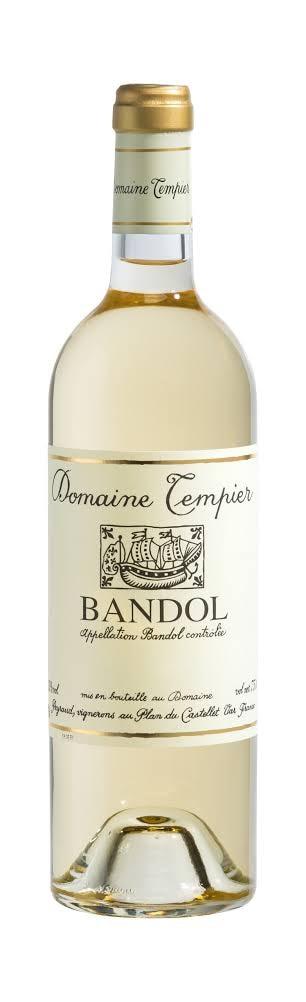
Producer
Domaine Tempier
 Bandol, Provence, France
The history of the estate dates to 1834, when Léonce Tempier acquired the land and built the bastide that remains the center of the property. Its modern identity was forged starting in 1936 when Lucie Tempier married Lucien Peyraud. They took over the management of the farm in 1940, and Lucien devoted himself to restoring the reputation of the Mourvèdre grape, which had been largely abandoned following the phylloxera crisis. Lucien was a primary advocate for the creation of the Bandol AOC in 1941 and served as the president of the local wine syndicate for 37 years. Today, the domaine remains under the ownership of the Peyraud family and has been managed since 2000 by winemaker and director Daniel Ravier.
The estate encompasses 60 hectares of vineyards distributed across a patchwork of geological sites within the Bandol appellation. The soils are predominantly clay and limestone, with specific parcels featuring sandy marls and rudist limestone. The farming philosophy follows biodynamic and organic principles, utilizing manual labor, natural fertilizers, and treatments like herbal teas to maintain soil health. Grapes are hand-harvested and sorted twice to ensure quality. In the cellar, the winemaking process relies on indigenous yeasts for fermentation in concrete vats. The red wines are aged for a minimum of 18 months in large oak foudres, a practice that allows the wine to mature slowly without the wood-derived flavors often associated with smaller new oak barrels.
Domaine Tempier is most recognized for its role in establishing Bandol as a source of serious red wines and high-quality rosé. The portfolio includes the Cuvée Classique, a blend of several parcels, and three distinct single-vineyard reds known as La Migoua, La Tourtine, and Cabassaou. La Migoua is characterized by its higher Grenache content and specific aromatic profile, while La Tourtine and Cabassaou are Mourvèdre-heavy and known for their structural depth. The estate also produces a benchmark Bandol Rosé, which is notable for its complexity and ability to age for several years. These wines are widely considered the standard for the region, reflecting a commitment to the expression of terroir through the Mourvèdre variety.