Producer
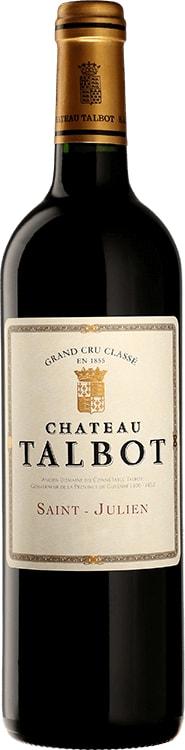
Château Talbot
 Saint-Julien, Bordeaux, France
Château Talbot takes its name from Sir John Talbot, the Earl of Shrewsbury and Governor of Aquitaine, who was defeated at the Battle of Castillon in 1453. For nearly two centuries, the property belonged to the Marquis d'Aux de Lescout family. In 1918, the estate was purchased by Désiré Cordier, a prominent Bordeaux wine merchant who also owned Château Gruaud Larose. The property remained within the Cordier family through subsequent generations, led first by Georges and then by Jean Cordier. Following Jean's death in 1993, his daughters Lorraine and Nancy took management of the estate. Today, Nancy Bignon Cordier leads the winery alongside her husband, Jean Paul Bignon, representing the fourth generation of the family at the property.
The estate encompasses 110 hectares of vines situated in a single block near the Gironde estuary. This large vineyard sits on the highest point of the Saint Julien plateau, where the soil consists of fine Gunzian gravel over a limestone core. Red grape plantings are dominated by Cabernet Sauvignon at approximately 66 percent, followed by 26 percent Merlot and small amounts of Petit Verdot and Cabernet Franc. Management of the property is overseen by general manager Jean Michel Laporte, who joined in 2018. The winemaking process involves hand harvesting and aging in oak barrels, with 50 to 60 percent new wood used for the grand vin. Technical facilities were significantly updated in 2012 with the completion of a large architectural cellar featuring tree like concrete pillars.
Château Talbot was classified as a Fourth Growth in the 1855 Bordeaux Wine Official Classification. It is widely recognized for the consistency and accessibility of its red wines, which typically display the structured yet silky tannins characteristic of the Saint Julien appellation. The estate produces three distinct labels: the grand vin Château Talbot, a second red wine called Connétable Talbot, and a dry white wine named Caillou Blanc. Caillou Blanc is notable for being one of the first white wines produced in the Médoc after white varieties were replanted by Georges Cordier in the 1930s. The property maintains a significant production volume, making it one of the most widely available classified growths in the region.