Producer
Château Nénin
 Pomerol, Bordeaux, France
The history of Château Nénin extends back to the 18th century, when the property was owned by the Demay family. In the middle of the 19th century, the estate came under the management of the Paillet family, followed by the Despujols, who maintained ownership from 1847 until the late 20th century. In 1997, Jean-Hubert Delon purchased the property from his cousins just before the harvest. Delon, who also manages the Médoc estates Château Léoville Las Cases and Château Potensac, immediately began a comprehensive renovation of the property. This included major restructuring of the vineyards, modernization of the winery, and the installation of a new vat room and air-conditioned cellars.
The estate covers 32 hectares in the Pomerol appellation, making it an unusually large holding for the region. The vineyards are primarily located on the Pomerol plateau, a site characterized by a complex mosaic of soils including deep gravel, clay, and iron-rich deposits. These plantings consist of approximately 76 percent Merlot, 23 percent Cabernet Franc, and 1 percent Cabernet Sauvignon. Under the direction of the Delon family, the proportion of Cabernet Franc has increased to provide the wines with greater structure and freshness. Winemaking follows traditional methods, with fermentation in temperature-controlled stainless steel vats and aging for 15 to 18 months in French oak barrels, with roughly one third being new oak.
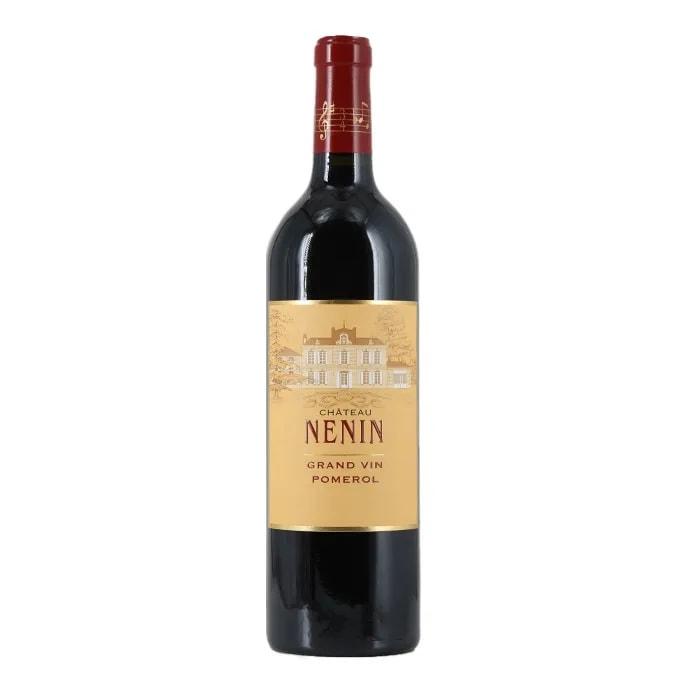
Château Nénin produces two primary red wines, both of which are Merlot-dominant blends. The grand vin, Château Nénin, is a wine intended for long-term cellaring and is known for its balance of power and tannic structure. In 1997, the estate introduced its second wine, Fugue de Nénin, which is typically sourced from sandy-clay soils in the eastern part of the vineyard and intended for earlier consumption. Although Pomerol has no official classification system, the estate is regarded as a significant producer within the appellation. Quality has seen a notable increase since the 2015 vintage, reflecting more stringent selection and lower yields that emphasize the natural tension and aromatic complexity of the site.