Producer
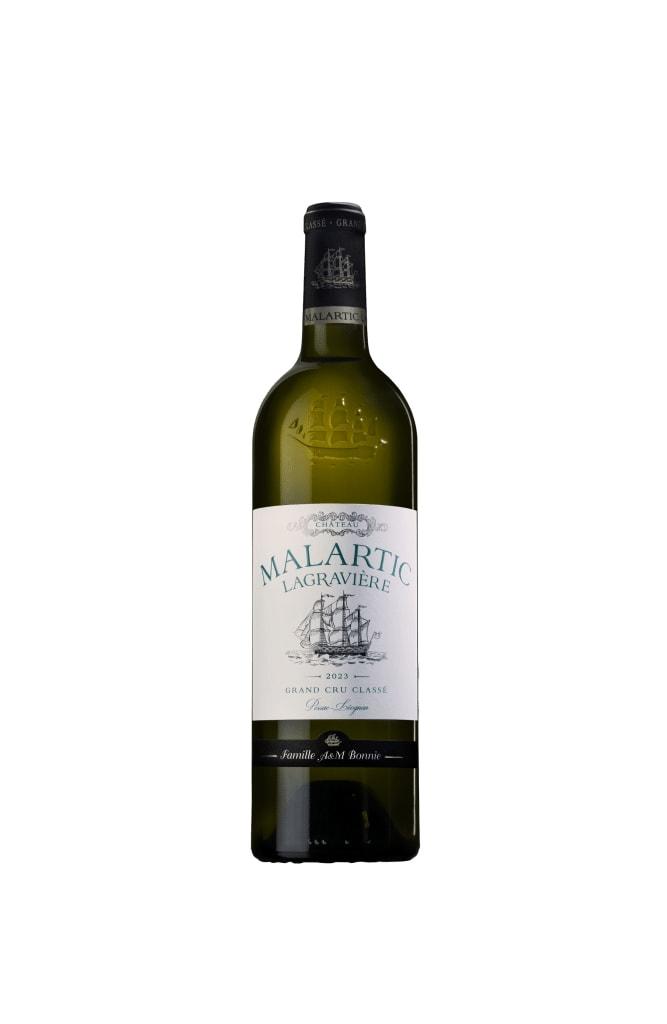
Château Malartic-Lagravière
 Pessac-Léognan, Bordeaux, France
Château Malartic-Lagravière traces its origins to the late 18th century when the estate, then known as Domaine de Lagravière, was acquired by the family of Count Hippolyte de Maurès de Malartic. The Malartic family, distinguished by their naval service, held the property for several decades before it was purchased in 1850 by Madame Arnaud Ricard. She renamed the estate Malartic-Lagravière in honor of the former owners and managed the property through a lineage that remained in the family for 140 years. Following a brief period of ownership by the Champagne house Laurent-Perrier starting in 1990, the estate was purchased in 1997 by Alfred-Alexandre and Michèle Bonnie. Today, the property is managed by their children, Jean-Jacques and Véronique Bonnie.
The vineyards cover 73 hectares in the Léognan commune, consisting of a high terrace characterized by deep Günzian gravel deposits reaching up to eight meters deep. The soil includes a complex subsoil of clay, limestone, and fossilized shells, providing efficient drainage and a steady water supply for the vines. Farming practices follow a sustainable agroecological approach, and the estate holds High Environmental Value certification. The technical facilities were completely modernized in 1998 with the construction of a gravity-fed winery designed by Bernard Mazières. This facility allows for the movement of grapes and juice without mechanical pumping, aiming to preserve the integrity and precision of the fruit.
As one of only six estates in Bordeaux to be classified for both red and white wines in the 1953 Graves classification, the property maintains a dual reputation for high-quality production. The grand vin red is typically a blend dominated by Cabernet Sauvignon and Merlot with small amounts of Cabernet Franc and Petit Verdot, while the white is made from Sauvignon Blanc and Sémillon. These wines are recognized for their balance and structural refinement. The estate also produces a second label, Le Comte de Malartic, formerly known as Le Sillage de Malartic, along with a rosé wine. Winemaking is overseen by Jean-Jacques Bonnie with technical consultation from Eric Boissenot and Michel Rolland.