Producer
Château Lascombes
 Margaux, Bordeaux, France
Château Lascombes began in the 17th century when it was part of the Durfort de Duras estate. It was formally established as a separate property in 1625 and later named after Antoine, Chevalier de Lascombes, who inherited it in the late 1600s. The property was classified as a Second Growth in the 1855 Bordeaux Classification. Over the following centuries, ownership transitioned through several hands, including the Ginestet family and a group led by Alexis Lichine in 1952. After periods under the British brewery Bass Charrington and investment firms Colony Capital and MACSF, the estate was purchased by Gaylon Lawrence Jr. and the Lawrence family in 2022. This acquisition marked the family's first expansion into Europe from their existing wine holdings in Napa Valley.
The estate manages approximately 120 hectares of vines, making it one of the largest properties in the Margaux appellation. Its terroir is divided into three distinct soil profiles comprising gravelly outcrops, clay gravel, and clay limestone. These diverse conditions allow for a grape composition that is unusual for the Médoc, with Merlot accounting for roughly 50 percent of the vineyard area alongside Cabernet Sauvignon and Petit Verdot. Winemaking takes place in a gravity fed facility constructed in 2001, which spans four levels to minimize mechanical pumping. Under the current direction of Axel Heinz, who joined from Ornellaia in 2023, the winery has implemented a new technical strategy focusing on the specific identity of individual vineyard plots. The wine typically ages for 18 to 20 months in French oak barrels, using a high proportion of new wood.
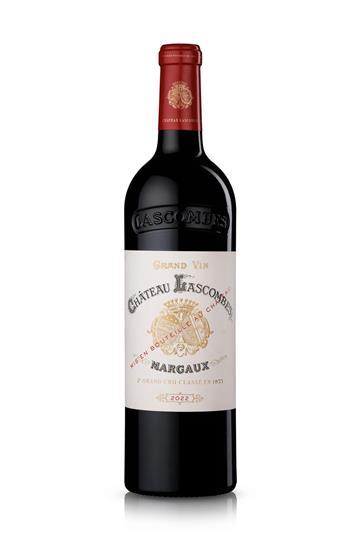
The primary wine is the Grand Vin, Château Lascombes, which is noted for its structure and the typical character of the Margaux appellation. The estate also produces a second label, Chevalier de Lascombes, made from younger vines and fruit from satellite plots. A third wine, Haut Médoc de Lascombes, originates from the property's holdings outside the Margaux appellation boundaries. Recently, the winery introduced La Côte Lascombes, a specialized 100 percent Merlot cuvée sourced from 60 year old vines grown on blue clay soil. As a Second Growth, the château occupies a significant position in the Bordeaux hierarchy, and its large production volume ensures it remains a widely available example of the Margaux style.