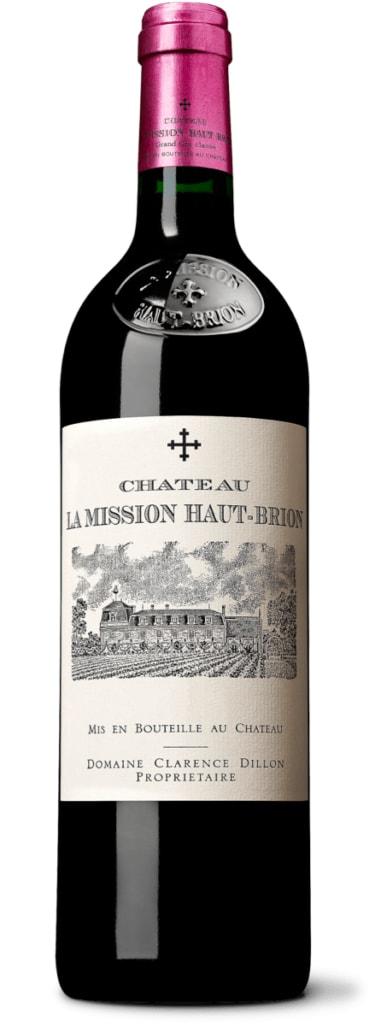
Producer
Château La Mission Haut-Brion
 Pessac-Léognan, Bordeaux, France
The estate began in 1540 when Arnaud de Lestonnac, a merchant from Bordeaux, purchased the plot of land known as Arregedhuys and married the sister of the owner of the neighboring Château Haut-Brion. The property was eventually bequeathed to the Congregation of the Mission, a religious order known as the Lazarists, in 1682. The priests expanded the vineyards and produced wine for over a century until the French Revolution led to state expropriation. Following several changes in private ownership during the 19th and early 20th centuries, including the Chiapella and Woltner families, the Dillon family of Domaine Clarence Dillon acquired the property in 1983.
The vineyards cover approximately 30 hectares in the commune of Talence, situated on deep gravel deposits over subsoils of clay, sand, and limestone. The red wine plantings consist of roughly 46 percent Cabernet Sauvignon, 44 percent Merlot, and 10 percent Cabernet Franc, while the white wine vineyards are dedicated to Sémillon and Sauvignon Blanc. Winemaking involves fermentation in large temperature controlled stainless steel vats. The estate follows a distinct philosophy of blending the wine shortly after malolactic fermentation is complete, which occurs before the aging process begins in 100 percent new French oak barrels.
Château La Mission Haut-Brion holds the rank of Cru Classé in the 1953 Graves classification. Despite its historical exclusion from the 1855 classification of the Médoc, it is frequently described by critics as having the quality of a sixth Premier Cru. The estate produces its namesake red Grand Vin and a dry white wine formerly known as Château Laville Haut-Brion, which was rebranded as Château La Mission Haut-Brion Blanc in 2009. The property also produces a second wine, La Chapelle de la Mission Haut-Brion, which since 2006 has incorporated the fruit from the former Château La Tour Haut-Brion vineyards.