Producer
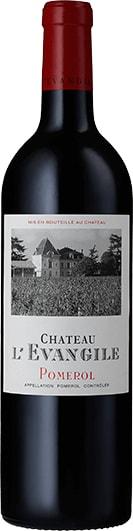
Château L'Évangile
 Pomerol, Bordeaux, France
The history of Château L'Évangile dates to 1741 when the property was first recorded in the land registry under the name Fazilleau. During the mid eighteenth century, the Léglise family from Libourne established the estate and developed its vineyards. Following the French Revolution, the property passed to the Isambert family, who renamed it L'Évangile. In 1862, Paul Chaperon purchased the estate and constructed the current residence. His descendants, the Ducasse family, maintained ownership for over a century, navigating the recovery from the severe frost of 1956. Domaines Barons de Rothschild (Lafite) acquired a majority interest in 1990 and took full control of the property later that decade. Saskia de Rothschild currently chairs the group, overseeing the estate.
The vineyard occupies 22 hectares on the southeastern Pomerol plateau, situated between Château Pétrus and Saint Emilion's Cheval Blanc. The terroir is characterized by sandy clay soils mixed with pure gravel, resting on a subsoil of iron residues known as crasse de fer. The plantings consist of approximately 80 percent Merlot and 20 percent Cabernet Franc, with a small experimental block of Cabernet Sauvignon introduced recently. L'Évangile was the first of the Rothschild Bordeaux estates to convert to organic farming, receiving certification in 2021. Winemaking involves manual harvesting and parcel by parcel fermentation in cement and stainless steel vats. The wines typically age for 18 months in French oak barrels, with around 70 percent being new wood for the grand vin.
The producer is best known for its grand vin, Château L'Évangile, which is regarded as one of the major wines of Pomerol. While Pomerol lacks an official classification system, the 1868 edition of Cocks and Féret recognized the estate as a Premier Cru du Haut Pomerol. The winery also produces a second wine, Blason de L'Évangile, which was introduced by the Rothschild family to allow for more rigorous selection of the primary label. The style of the house is often noted for a balance of power and fruit density, with the high percentage of Cabernet Franc contributing structure and floral aromatics. It remains a significant property in the Right Bank landscape, frequently cited among the leading growths of the appellation.