Producer
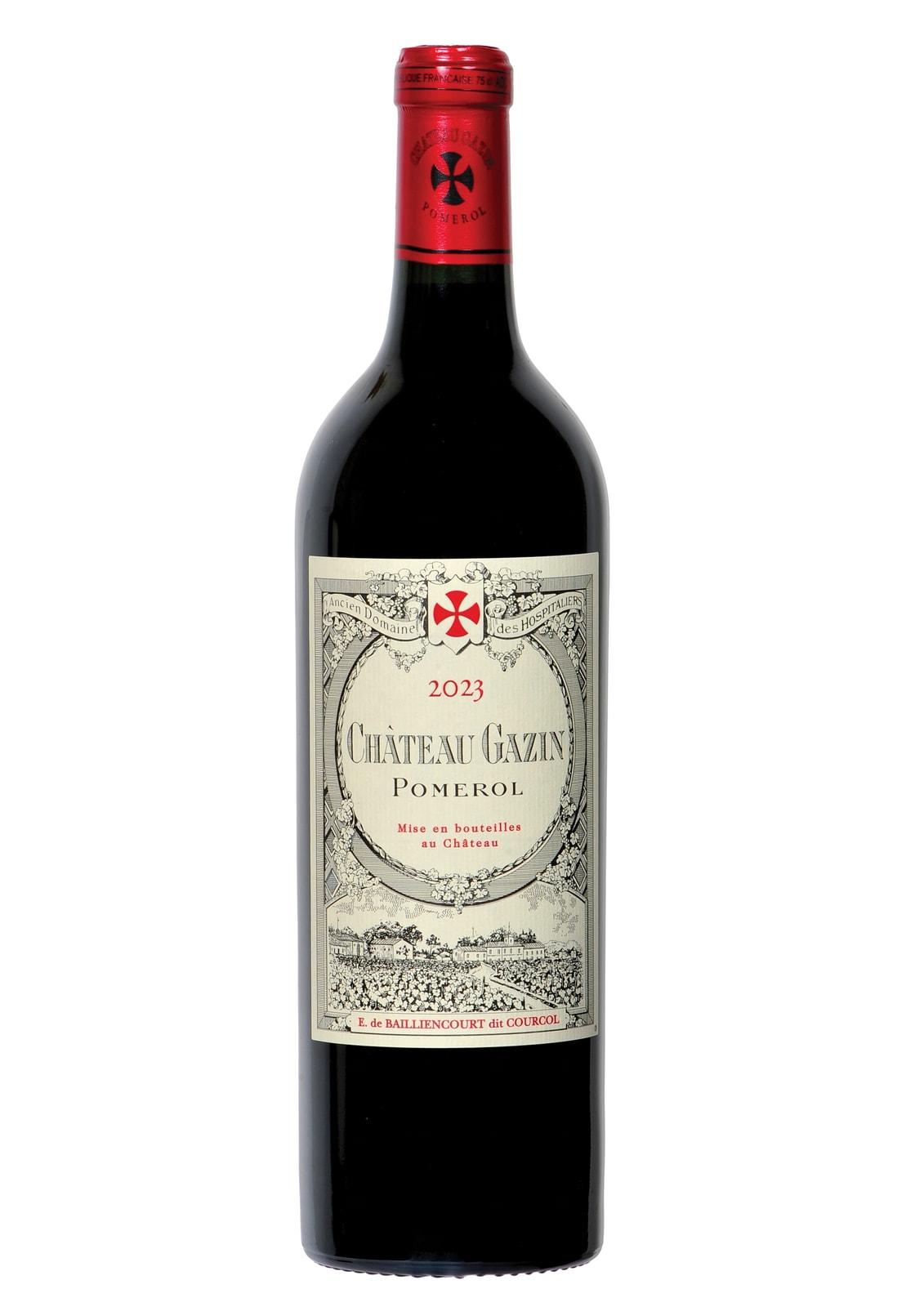
Château Gazin
 Pomerol, Bordeaux, France
Château Gazin occupies land once owned by the Knights Hospitallers of Saint John of Jerusalem, who managed a hospital for pilgrims on the route to Santiago de Compostela. The modern lineage of the property dates to 1918, when Louis Soualle purchased the estate. Management passed to his daughter and her husband, Edouard de Bailliencourt dit Courcol, whose family has retained ownership for over a century. The dit Courcol title was granted to the family by King Philippe Auguste in 1214 following the Battle of Bouvines. Today, the fifth generation of the family, including Nicolas and Christophe de Bailliencourt, oversees the operations. The estate maintains its independence and family-run character, which is distinct among the larger holdings in the region.
The estate consists of 26 hectares situated in a single block on the upper plateau of Pomerol, making it one of the largest vineyard holdings in the appellation. The terroir is characterized by Gunzian gravel over a subsoil of blue and green clay containing iron oxides. These smectite clays provide a consistent water supply to the vines, which are predominantly Merlot at 90 percent of the plantings, supplemented by 7 percent Cabernet Sauvignon and 3 percent Cabernet Franc. Viticulture follows traditional methods, including manual harvesting and the use of organic fertilizers. In the cellar, technical director Mickaël Obert and winemaker Rémi Beauche oversee fermentation in small concrete vats. The wines age for 18 months in French oak barrels, with approximately 50 percent new wood used for each vintage.
Château Gazin is the primary label of the estate, while the second wine, L'Hospitalet de Gazin, has been produced since 1986. The property shares borders with neighboring Petrus and Château L’Évangile, placing it in one of the most notable sectors of the Right Bank. It is a member of the Union des Grands Crus de Bordeaux and the Académie du Vin de Bordeaux. Though Pomerol lacks a formal classification system, the estate is recognized for producing structured wines that reflect the clay and gravel soils of the plateau. Its reputation is supported by the fact that nearly 90 percent of its production is exported through the Bordeaux merchant system.