Producer
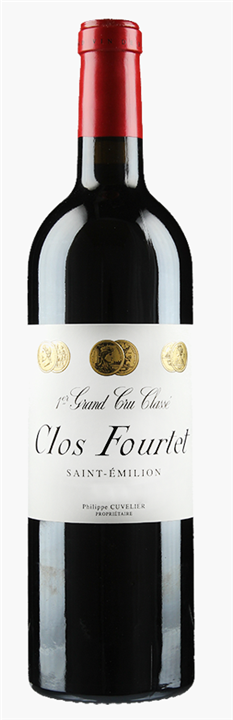
Château Clos Fourtet
 Saint-Émilion, Bordeaux, France
The estate originated in the Middle Ages as a defensive fort known as Camfourtet, located at the western gates of Saint-Émilion. Formal viticultural development began in the mid-18th century under the Rulleau and Carles families, and the present château was constructed during this period. The name was changed to Clos Fourtet in 1868. Ownership moved from the Ginestet family to the Lurton family in 1949, when Pierre Ginestet sold the estate to finance his purchase of Château Margaux. In 2001, Philippe Cuvelier acquired the property from the Lurtons. The estate remains in the Cuvelier family today, with Matthieu Cuvelier overseeing operations alongside other family holdings such as Château Poujeaux in Moulis.
The 20-hectare vineyard sits on the highest part of the Saint-Émilion limestone plateau, where the soil consists of a thin layer of clay over a deep limestone base. This geography provides natural drainage and encourages the vines to penetrate the rock for moisture. The vineyard is planted with approximately 85 percent Merlot, 10 percent Cabernet Sauvignon, and 5 percent Cabernet Franc. Technical director Emmanuel de Saint Salvy manages the winemaking with consulting from Stéphane Derenoncourt and Jean-Claude Berrouet. The wines age for 14 to 18 months in a 13-hectare network of underground limestone caves located six to twelve meters beneath the vines. These quarries provide a stable, naturally cool environment for maturation.
Château Clos Fourtet is classified as a Premier Grand Cru Classé, a designation it has maintained since the first Saint-Émilion classification in 1955. The estate is recognized for a style that emphasizes mineral tension, freshness, and structural finesse rather than heavy extraction. In addition to the grand vin, the property produces a second wine named La Closerie de Fourtet. Under the Cuvelier family, the estate has modernized its cellar facilities and transitioned toward organic and biodynamic farming methods. The 2009 vintage received a perfect 100-point score from major critics, which significantly raised the international profile of the estate and its reputation for consistency in the modern era.