Producer
Bosquet des Boiron
 Côtes-du-Rhône, Rhône Valley, France
The Boiron family established this estate in 1860 when Emmanuel Boiron began acquiring vineyard land in the southern Rhône Valley. For several decades starting in 1936, the family produced and marketed their wine under the label Clos Chantemerle, a practice that continued through the tenure of Joseph-Victor Boiron. In 1966, Maurice Boiron transitioned the operations to the name Bosquet des Papes, which translates to the pope’s grove. Today, the fifth generation of the family, Nicolas Boiron and his wife Jeanne-Claire, manage the property. Nicolas began working alongside his father in 1995 and assumed full control of the domain in 2004, continuing a lineage of father-to-son succession that has lasted over 160 years.
The family manages a total of 32 hectares of vines, which are distributed across roughly 40 distinct parcels. While the majority of these holdings are within the Châteauneuf-du-Pape appellation, 3.5 hectares are located in the communes of Orange and Courthézon specifically for the production of Côtes-du-Rhône wines. These vineyards are characterized by clay-limestone soils covered with rolled pebbles, known as galets roulés, which serve to store solar heat during the daylight hours and radiate it back to the vines at night. The winemaking philosophy emphasizes traditional techniques, such as fermentation in thermoregulated concrete vats and aging in a combination of large oak foudres and demi-muids for six to eighteen months. The grapes are approximately 90 percent de-stemmed before undergoing a cold pre-fermentation maceration.
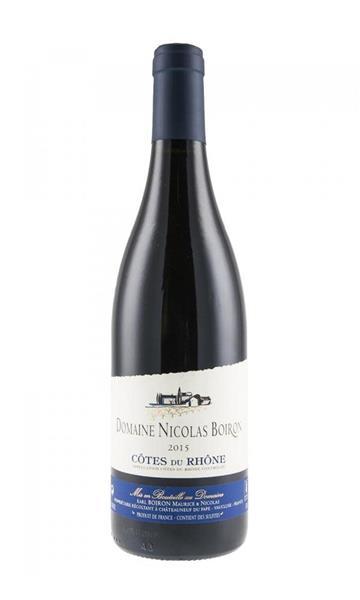
The Bosquet des Boiron label represents the estate’s primary Côtes-du-Rhône offering, typically crafted from a blend of 80 percent Grenache with smaller portions of Syrah and Cinsault. The winery is recognized for a style that prioritizes longevity and structural integrity over high-extraction modern trends. Critics often note a shift under Nicolas Boiron toward a more refined and fruit-driven profile compared to the rustic tannins of previous generations. The estate's top cuvées, including Chante le Merle, are sourced from vines that are over 100 years old. This focus on old-vine concentration and traditional aging vessels has solidified the producer's position as a reliable source for age-worthy southern Rhône reds that express the complexity of their varied soil types.