Producer
Solis Lumen
 Sud de France, Languedoc-Roussillon, France
The Coste family manages Solis Lumen as a dedicated project within the broader operations of Domaine Montrose. Based in the village of Tourbes near Pezenas, the family has a recorded history of winemaking in the Languedoc region dating back to 1701, when an ancestor named Joseph Alazard was granted a family crest featuring three lizards. Olivier Coste represents the ninth generation of his family to produce wine in this region and developed this specific range to focus on contemporary environmental standards and approachable styles. The brand serves as a modern extension of a lineage that has inhabited and farmed these coastal lands for centuries, using the name Solis Lumen to translate as Light of the Sun.
Winemaking for this label follows a negociant model, involving a careful selection of grapes from partner growers located throughout the Languedoc. These vineyards are influenced by the Mediterranean climate and sit on diverse geological formations. Soils are primarily composed of Villafranchian pebbles and calcareous-clay gravels which provide drainage and mineral character. The viticultural approach is strictly organic and the entire production is certified carbon neutral. To maintain the aromatic profile of the fruit, grapes are harvested during the cooler night temperatures. Fermentation for the rose occurs in temperature-controlled stainless steel vats at low temperatures between 15 and 18 degrees Celsius. The orange wine undergoes maceration in concrete tanks to develop texture and complex spice notes without extracting harsh tannins.
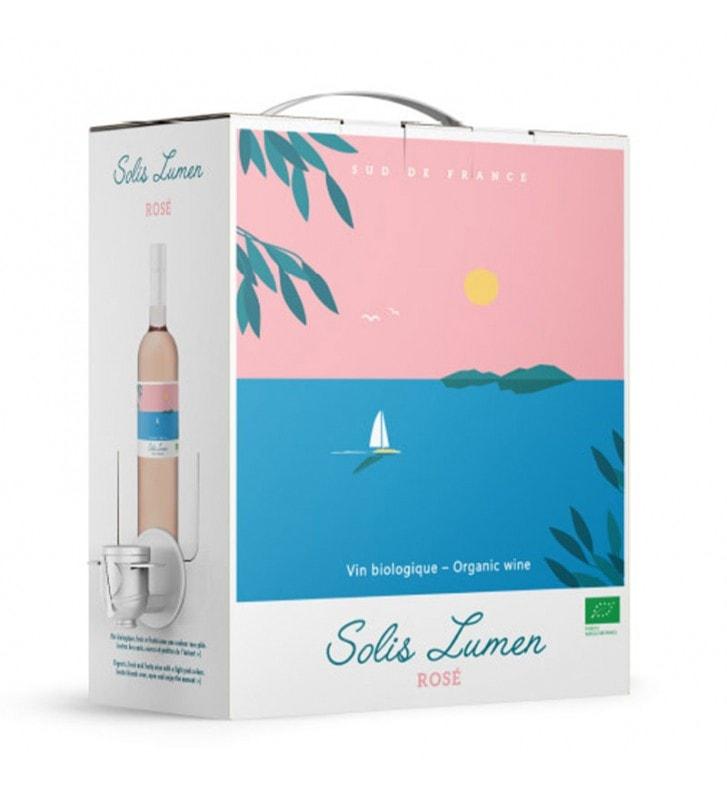
The producer is primarily recognized for its organic rose, typically a blend of Grenache and Cinsault that emphasizes notes of red berries and citrus. Another notable offering is the skin-contact orange wine, which uses Muscat Petits Grains and Grenache Gris to produce a profile of dried spices and citrus zest. Beyond the liquid itself, the brand has built a reputation for its commitment to sustainability and carbon footprint reduction. This is evidenced by the use of lightweight eco-friendly bottles and alternative packaging such as infinitely recyclable cans and bag-in-box formats. The company measures and compensates for one hundred percent of its carbon emissions through environmental initiatives. These choices position the estate as a producer of accessible wines that prioritize regional freshness and planetary health.