Producer
Krug
 Montagne de Reims, Champagne, France
Joseph Krug established the house in Reims in 1843. He previously served as a partner at the house of Jacquesson but left to pursue a vision of creating a champagne of consistent quality every year regardless of climate variations. The company remained under family management for six generations, maintaining a distinct production style that emphasized individual plot expression and blending. In 1999, the Krug family sold the business to the LVMH group, specifically its Moët Hennessy wine and spirits division. Despite the change in ownership, family members remained involved in the management and the tasting committee, with Olivier Krug currently serving as the house director and representative of the sixth generation.
The winemaking process focuses on the individuality of each vineyard plot. Krug ferments all of its base wines in small, seasoned 205 liter oak barrels, a practice that allows for micro oxygenation without adding new wood flavors. The house manages approximately 21 hectares of its own vineyards, which account for roughly 20 percent of its total production needs. The remaining fruit is sourced through long term contracts with growers across several villages, including Ambonnay and Le Mesnil sur Oger. Notable estate holdings include two walled vineyards. These are the 1.84 hectare Clos du Mesnil, which produces a single plot Chardonnay, and the 0.68 hectare Clos d'Ambonnay, dedicated to Pinot Noir. Base wines are kept separate by plot and vintage in an extensive reserve library that the tasting committee uses to build the annual blends.
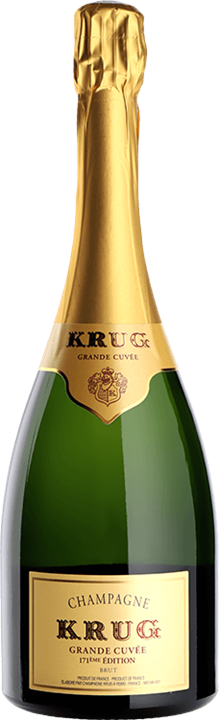
The flagship wine is the Krug Grande Cuvée, which the house positions as its most complete expression rather than a standard non vintage label. Each bottle is designated by an edition number representing the number of times the house has recreated the founder's original vision since its inception. These blends typically incorporate over 120 different wines from ten or more vintages. Other wines in the portfolio include Krug Rosé, vintage dated releases, and the rare single vineyard bottlings. Since 2011, every bottle features a six digit Krug iD on the back label. This code provides consumers with specific technical details, such as the number of wines in the blend and the date of disgorgement. The house style is characterized by high acidity and substantial depth. These wines typically show significant potential for long term cellar aging.