Producer
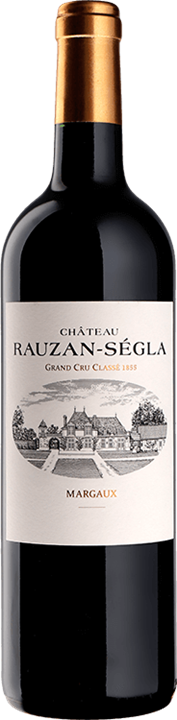
Château Rauzan-Ségla
 Margaux, Bordeaux, France
The estate traces its origins to 1661, when Pierre Desmezures de Rauzan purchased the noble house of Gassies. During the mid eighteenth century, the vast Rauzan holdings were divided among heirs, resulting in the creation of two distinct properties, Château Rauzan-Ségla and Château Rauzan-Gassies. The Ségla name was added in 1785 following the marriage of Catherine de Rauzan to Baron Pierre Louis de Ségla. Ownership remained within the same family for two centuries before passing through several hands, including the Cruse family and shipping magnate John Holt. In 1994, the Wertheimer family, owners of Chanel, purchased the property and initiated a restoration of the cellars and vineyard. This acquisition led to the reinstatement of the original Rauzan-Ségla spelling, which had been modified to Rausan-Ségla for much of the twentieth century.
The vineyard covers approximately 70 hectares of land divided into two main sections, with one portion near the village of Margaux and the other situated on the Cantenac plateau. The terroir consists of deep, fine gravel and clay soils situated on a quaternary terrace near the Gironde estuary. Current plantings are dominated by 62 percent Cabernet Sauvignon and 36 percent Merlot, with minor portions of Petit Verdot and Cabernet Franc. Under the managing direction of Nicolas Audebert, the estate transitioned to organic farming and received official certification with the 2024 vintage. Winemaking involves parcel by parcel fermentation in 35 temperature controlled stainless steel vats of varying sizes to maintain the specific character of each individual plot. The wine ages for 18 months in French oak barrels, with approximately 50 to 60 percent new wood used depending on the requirements of the vintage.
Ranked as a Second Growth in the 1855 Classification of the Médoc, the estate is recognized for a style that combines the aromatic finesse of the Margaux appellation with significant structural depth. In addition to the primary grand vin, the property produces a second label named Ségla, which was introduced in 1995 to utilize fruit from younger vines and satellite parcels. The estate historically attracted several prominent admirers, including Thomas Jefferson, who ordered cases for himself and George Washington while serving as ambassador to France. Today, the property is often grouped with the top performers of the Left Bank. It maintains a reputation for consistency and technical precision, supported by investments in sorting technology and modernized vat facilities. Total production for the first label is approximately 100,000 bottles annually.