Producer
Château Léoville Poyferré
 Saint-Julien, Bordeaux, France
Château Léoville Poyferré was established as an independent property in 1840 following the division of the large Léoville estate, which dates back to 1638. The original vineyard, known as Mont-Moytié, was founded by Jean de Moytié before being renamed Léoville by Alexandre de Gascq in the 18th century. The property took its current name when Jeanne de Las Cases married the Baron Jean-Marie de Poyferré and received her share of the land as an inheritance. In 1920, the Cuvelier family, who were established wine merchants from northern France, purchased the estate from the Lawton family. Their influence remains visible on the label, which still features the demi-wolf from the Lawton coat of arms. Didier Cuvelier managed the property for nearly forty years starting in 1979, with his niece, Sara Lecompte Cuvelier, assuming leadership in 2018.
The vineyard covers eighty hectares in the Saint-Julien appellation, composed of deep Garonne gravel terraces with sandy clay subsoils. The vines have an average age of thirty-eight years and are planted at a high density of about nine thousand vines per hectare. The variety distribution consists of sixty-eight percent Cabernet Sauvignon, twenty-four percent Merlot, six percent Cabernet Franc, and two percent Petit Verdot. Winemaking is led by oenologist Isabelle Davin with consulting from Michel Rolland. The grapes undergo parcel-by-parcel vinification in fifty-six temperature-controlled, truncated conical stainless steel tanks. This technology allows for precise extraction from individual soil types and ripeness levels. The grand vin is typically aged for eighteen to twenty months in French oak barrels, with approximately eighty percent being new wood.
Ranked as a Second Growth in the 1855 classification, the estate is widely recognized for a style that balances high concentration with polished tannins. It produces the namesake grand vin, Château Léoville Poyferré, and a second wine named Pavillon de Léoville Poyferré. The family also manages Château Moulin Riche, which originates from a specific twenty-hectare plot to the west of the main vineyard. While neighboring Léoville Las Cases and Léoville Barton are often characterized by their structure or strictness, Poyferré is frequently noted for its plush texture and accessibility in its youth. The property remains one of the largest in Saint-Julien and maintains a reputation for consistency across diverse vintages, often serving as a benchmark for the appellation.
Wines from Château Léoville Poyferré
4 wines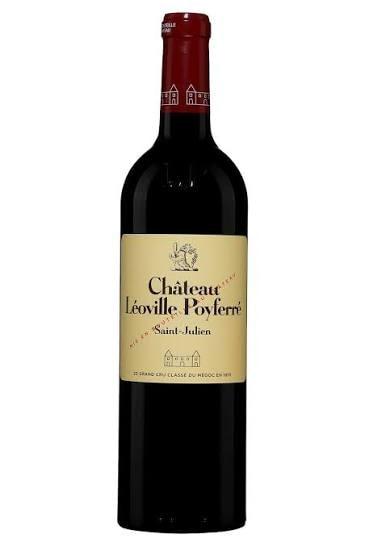 Bordeaux (Saint-Julien)
Château Léoville Poyferré
Château Léoville Poyferré · 2022
Red Blend
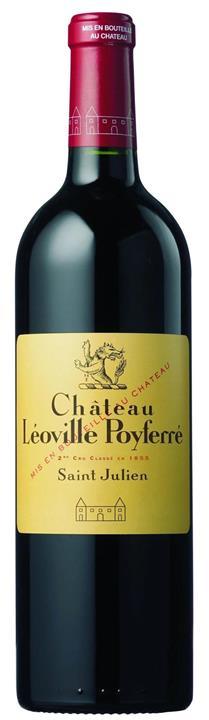 Bordeaux (Saint-Julien)
Château Léoville Poyferré
Château Léoville Poyferré · 2021
Red Blend
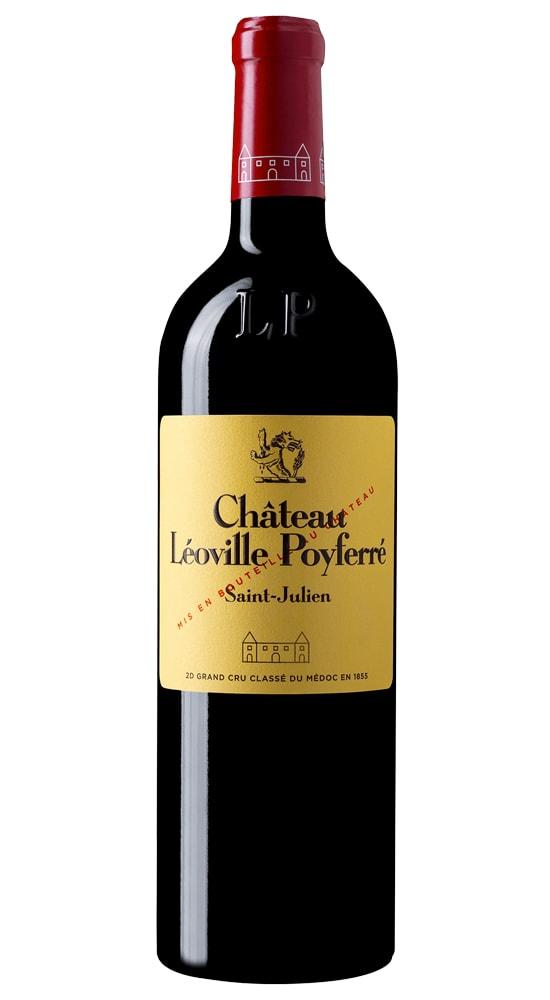 Bordeaux (Saint-Julien)
Château Léoville Poyferré
Château Léoville Poyferré · 2023
Red Blend
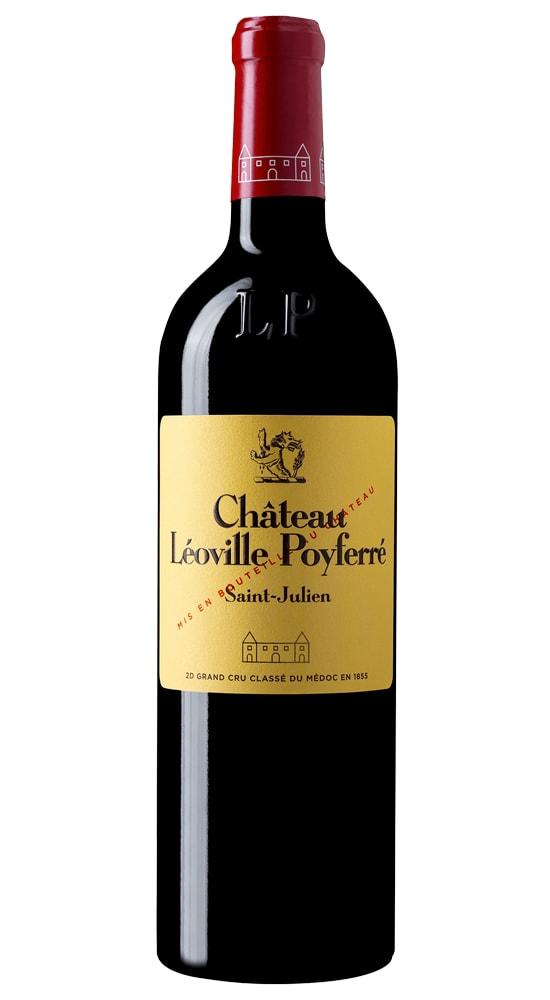 Bordeaux (Saint-Julien)
Château Léoville Poyferré
Château Léoville Poyferré · 2014
Red Blend