Producer
Château Lafon-Rochet
 Saint-Estèphe, Bordeaux, France
The history of the estate dates to the 16th century when it was known as Domaine de Rochet. The property became Château Lafon-Rochet in 1650 following the marriage of Antoinette de Guillemotes and Étienne de Lafon. It remained in the Lafon family for over two centuries, earning the title of Fourth Growth in the 1855 Classification of Bordeaux wines. In 1960, Guy Tesseron acquired the property during a period of decline and oversaw a complete reconstruction of the vineyard and the château buildings. The Tesseron family managed the estate for sixty years before selling it to the Lorenzetti family in 2021. Under the leadership of Jacky Lorenzetti, the property became part of the Vignobles Cruse-Lorenzetti group.
The vineyard covers 41 hectares in the Saint-Estèphe appellation, situated near the borders of Pauillac. The vines are planted in a single block adjacent to the holdings of Château Lafite Rothschild and Château Cos d'Estournel. The terroir consists of deep gravel and blue clay deposits on a limestone base, providing natural drainage and water retention. Cabernet Sauvignon is the primary variety, complemented by Merlot, Cabernet Franc, and Petit Verdot. Winemaking involves manual harvesting and fermentation in temperature controlled stainless steel and concrete vats. The aging process has recently shifted toward using larger oak foudres and concrete alongside traditional barrels to preserve fruit purity and balance.
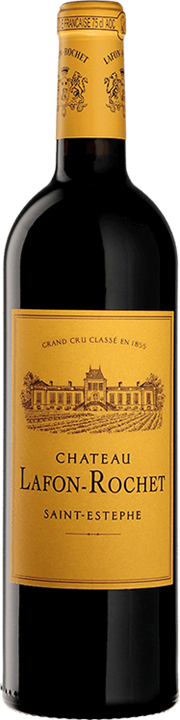
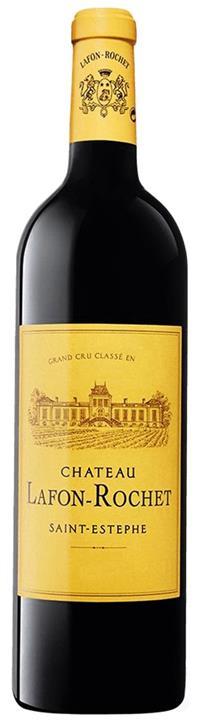
Château Lafon-Rochet is primarily recognized for its status as an 1855 Fourth Growth and its distinctive yellow facade, a color adopted for its labels and bottle capsules in 2000. The estate produces a Grand Vin characterized by the power of Saint-Estèphe combined with fresh aromatic intensity. Its second wine, Les Pèlerins de Lafon-Rochet, is made from younger vines and selected parcels that showcase a more approachable profile. The property has moved toward sustainable viticulture and achieved organic certification in recent years. This transition reflects a focus on terroir-driven expression and a stylistic move toward lower alcohol levels and increased precision in the final blend.