Producer
Château Haut-Bailly
 Pessac-Léognan, Bordeaux, France
Records of vine cultivation at this site date back to 1461, with the property taking its current name in 1630 when it was acquired by the Parisian banker Firmin Le Bailly. The estate gained significant attention in the late 19th century under the ownership of Alcide Bellot des Minières, who oversaw the construction of the current château and established its status for high quality. In 1955, the Sanders family purchased the property, beginning a multi-generational effort to modernize the vineyards and winemaking facilities. American banker Robert G. Wilmers bought the estate in 1998 and managed it until his death in 2017. Today, the Wilmers family remains the owner, with Chris Wilmers serving as proprietor and Veronique Sanders, granddaughter of the previous owner, leading the estate as president.
The estate consists of 30 hectares of vines situated on a high gravel and sand ridge in the Pessac Léognan appellation. The soil contains fossilized shells and marine sediments, which contribute to the drainage and mineral character of the wines. One of the most significant assets of the vineyard is a four-hectare plot of century-old vines, some over 120 years old, that includes a mix of Cabernet Sauvignon, Merlot, Cabernet Franc, Petit Verdot, Malbec, and Carmenère. Unlike most major estates in the Graves region, the property produces red wines exclusively and does not grow white grape varieties. Technical director Gabriel Vialard oversees the winemaking in a semi-underground cellar completed in 2020. This facility utilizes gravity flow and temperature-controlled concrete vats to process grapes from individual vineyard parcels separately.
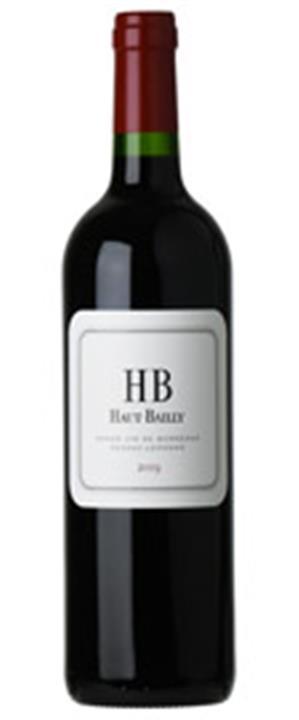
Château Haut-Bailly was classified as a Grand Cru Classé de Graves in 1953 and 1959. The flagship wine is recognized for its refined structure and balance, often showing silky tannins rather than high-alcohol power. The estate also produces a second wine, renamed Haut-Bailly II starting with the 2018 vintage, and a third label known simply as HB. Smaller productions of rosé are released in specific years. The property is frequently noted for its consistency across different vintages, maintaining a style that emphasizes elegance and the specific characteristics of its terroir. It remains a reference point for the left bank of Bordeaux for its ability to produce wines with great longevity.
Wines from Château Haut-Bailly
5 wines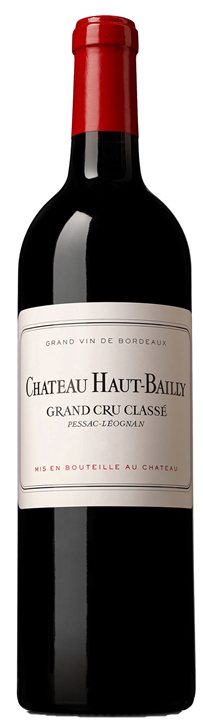 Bordeaux (Pessac-Léognan)
Château Haut-Bailly
Château Haut-Bailly · 2021
Red Blend
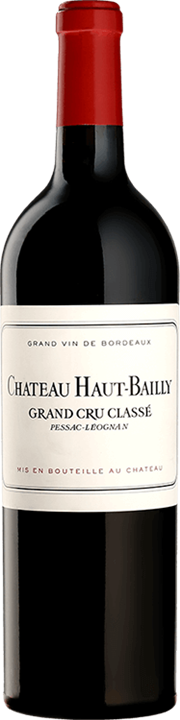 Bordeaux (Pessac-Léognan)
Château Haut-Bailly
Château Haut-Bailly · 2022
Red Blend
 Bordeaux (Pessac-Léognan)
Château Haut-Bailly
Château Haut-Bailly · 2023
Red Blend
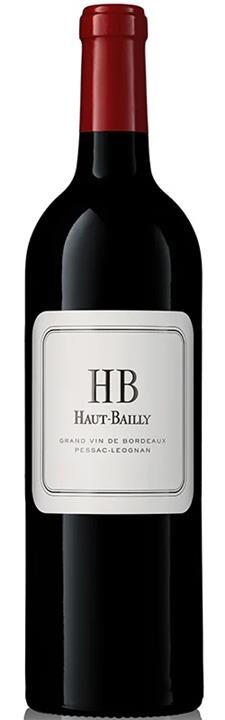 Bordeaux (Pessac-Léognan)
Haut-Bailly II
Château Haut-Bailly · 2023
Red Blend
 Bordeaux (Pessac-Léognan)
HB de Haut-Bailly
Château Haut-Bailly · 2022
Red Blend