Producer
Château Belgrave
 Médoc, Bordeaux, France
Château Belgrave served as a hunting lodge during the reign of Louis XV before its transition into a wine producing estate. Historically known as Château Coutanceau, the property was managed by the family of the same name for several centuries. In 1845, a Bordeaux negociant named Bruno Devez acquired the estate and renamed it Belgrave to emphasize the quality of its deep gravel soils. This identity was firmly established by the time of the 1855 Classification, where the winery was ranked as a Fifth Growth under its original name. The modern era of the estate began in 1979 when the firm Dourthe took over management. Dourthe, which is now part of the Thiénot Group, later purchased the property and implemented a comprehensive restoration of the vineyards and winery facilities.
The vineyard covers 60 hectares in the commune of Saint-Laurent-Médoc, situated on the border of the Saint-Julien appellation. The terroir is defined by two prominent gravel hillocks that provide natural drainage and reflect heat to the vines. These gravel deposits sit atop a subsoil of clay, a combination that allows for controlled water retention during dry growing seasons. Cabernet Sauvignon and Merlot are the primary plantings, with smaller portions of Petit Verdot and Cabernet Franc. Management follows a sustainable approach, utilizing parcel by parcel viticulture and gravity fed technology in the cellar to maintain the integrity of the fruit. The wine typically undergoes aging in French oak barrels for approximately 12 to 14 months, with about one third of the barrels being new for each vintage.
The flagship wine, Château Belgrave, is known for its structural balance and refined tannins, frequently exhibiting a style that resembles the neighboring wines of Saint-Julien. The estate also produces a second wine called Diane de Belgrave, introduced in 1987. Its name pays tribute to the Roman goddess of the hunt, referencing the property's historical origins. As one of the more accessible Fifth Growths in terms of price, the estate has a reputation for providing high quality and consistent expressions of the Haut-Médoc region. Recent investments have focused on increasing plant density and refining the selection process, which has resulted in wines with greater aromatic complexity and aging potential.
Wines from Château Belgrave
4 wines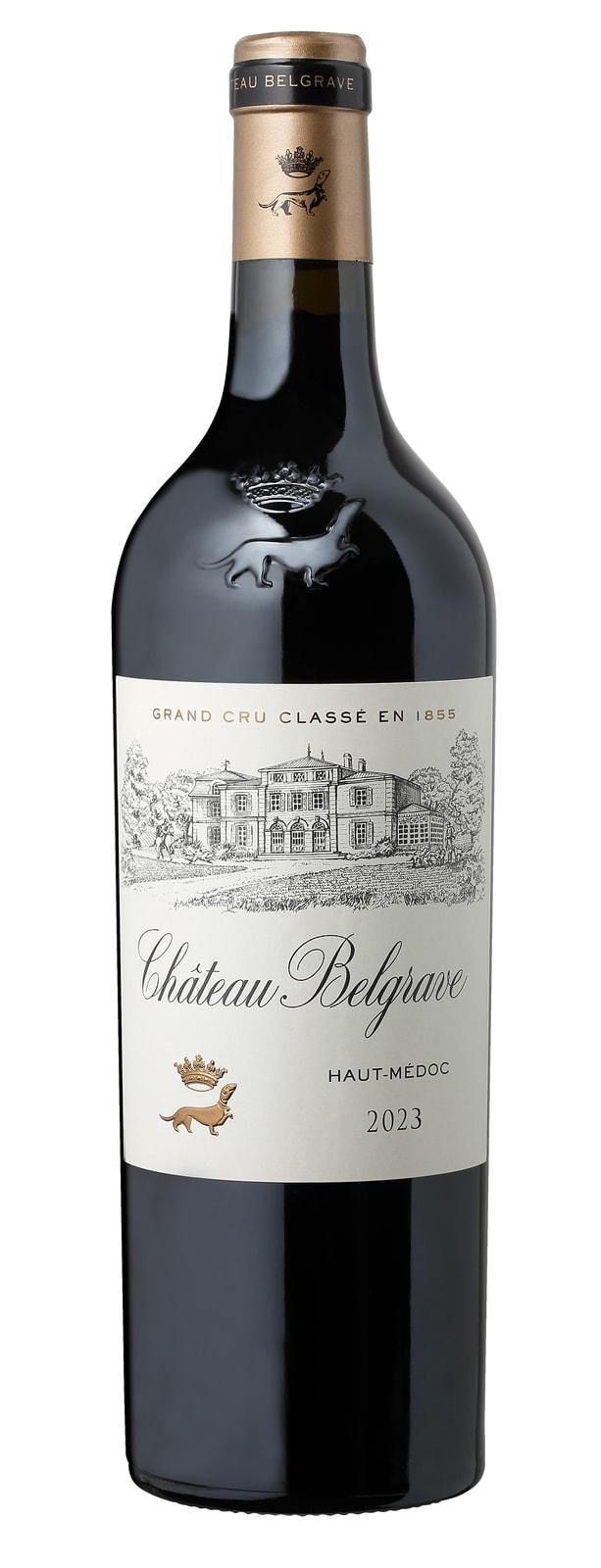 Bordeaux (Haut-Médoc)
Château Belgrave
Château Belgrave · 2023
Red Blend
 Bordeaux (Médoc)
Château Belgrave
Château Belgrave · 2016
Red Blend
 Bordeaux (Médoc)
Château Belgrave
Château Belgrave · 2022
Red Blend
 Bordeaux (Médoc)
Château Belgrave
Château Belgrave · 2020
Red Blend