Producer
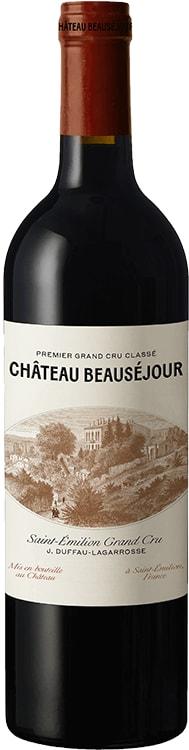
Château Beauséjour Duffau-Lagarrosse
 Saint-Émilion Grand Cru, Bordeaux, France
The history of Château Beauséjour traces back to medieval vineyards managed by the monks of Saint Martin de Mazerat, who cultivated the land under the name Peycoucou. In 1847, the property was acquired by the Duffau-Lagarrosse family through marriage into the Ducarpe family. The current estate was formally established in 1869 when the original Beauséjour vineyard was divided between two heirs. The portion belonging to the daughter of Pierre Paulin Ducarpe became Beauséjour Duffau-Lagarrosse. After decades of ownership by more than 30 different family members, the estate underwent a sale in 2021. Joséphine Duffau-Lagarrosse, representing the ninth generation, partnered with Prisca Courtin of the Clarins family to acquire the property and maintain family leadership.
The vineyard spans 6.8 hectares on the limestone plateau of Saint-Émilion with a south to southwest exposure. The soils consist of clay and limestone over a dense asteriated limestone subsoil, which provides natural drainage and specific mineral characteristics. Merlot occupies approximately 75 percent of the vineyard, while Cabernet Franc accounts for roughly 25 percent. The estate has recently increased the proportion of Cabernet Franc to enhance the tension and aromatic complexity of its wines. Winemaking occurs in concrete tanks, many of which feature an architectural fresco depicting the estate landscape. A new cellar was completed in 2024 to refine technical precision, with a focus on protecting the freshness provided by the limestone terroir. Aging typically involves 12 to 18 months in French oak barrels, with around 60 percent new wood used for the grand vin.
Château Beauséjour is classified as a Premier Grand Cru Classé B in the Saint-Émilion classification, a status it has held since the system was established in 1955. The estate achieved international recognition with its 1990 vintage, which received a 100 point score from Robert Parker and remains a significant wine for Right Bank collectors. Subsequent vintages in 2009 and 2010 also achieved high scores, reinforcing the reputation of the estate for quality and longevity. In addition to the grand vin, the property produces a second wine named Croix de Beauséjour. Since the 2021 ownership change, the labels feature the name of Joséphine Duffau-Lagarrosse to indicate the family connection and signify a new chapter for the property.