Producer
Agricola Fratelli Tedeschi
 Valpolicella, Veneto, Italy
The Tedeschi family has documented roots in the Valpolicella region dating back to 1630, though the modern commercial entity was established in 1824 by Nicolò Tedeschi. The estate moved toward its current focus on high quality production in the 1960s under Lorenzo Tedeschi, who shifted away from bulk sales to emphasize estate bottling and single-vineyard identification. In 1918, the family purchased the Monte Olmi vineyard, which later became the foundation for their most recognizable wine. Today, the winery is managed by Lorenzo's three children: Antonietta, Sabrina, and Riccardo. Antonietta oversees brand strategy and the domestic market, Sabrina manages international marketing, and Riccardo serves as the head enologist.
The family manages approximately 48 hectares of vineyards, with notable holdings in the Valpolicella Classica zone and the Maternigo estate in the eastern part of the appellation. The Maternigo property, acquired in 2005, features diverse white and yellow marl soils that have been the subject of intensive soil zoning and aromatic research conducted in partnership with the University of Verona. Winemaking emphasizes local varieties such as Corvina, Corvinone, and Rondinella. For their Amarone and Recioto wines, grapes undergo a traditional appassimento process of drying for roughly four months in a modern facility. The wines are typically aged in large Slavonian oak barrels rather than small barriques to preserve the aromatic identity of the fruit.
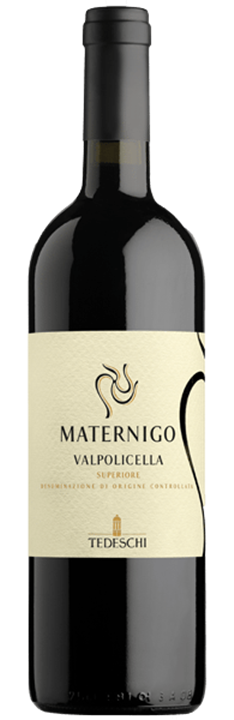
Tedeschi is primarily recognized for the Capitel Monte Olmi Amarone della Valpolicella Classica Riserva, which was first produced as a single-vineyard bottling in 1964. This bottling helped establish the family as a specialist in site-specific viticulture within the region. Other significant labels include the La Fabriseria range and the Maternigo Valpolicella Superiore, both of which highlight the distinct characteristics of their respective soil types. The estate is a founding member of Le Famiglie Storiche, an association of historical producers dedicated to preserving traditional quality standards. Their house style favors dry, structured wines with high acidity and distinct tannins, consciously avoiding the modern trend toward higher residual sugar levels in Amarone production.